“There's no such thing as a perfect piece of writing” : Hear the Wind Sing #001 Discover Japanese with Haruki Murakami
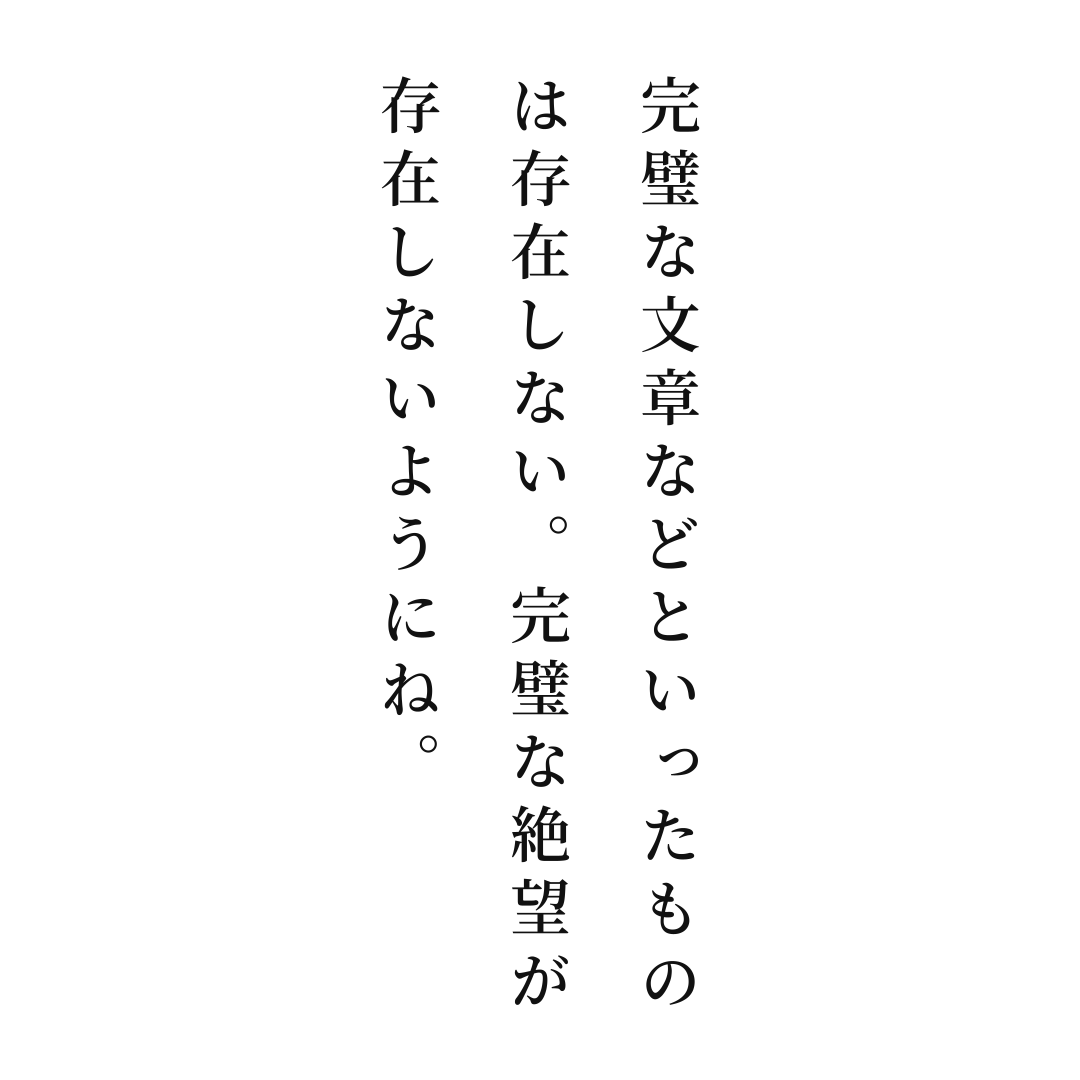
The Japanese Original
完璧な文章などといったものは存在しない。完璧な絶望が存在しないようにね。
A Reading Guide (Rōmaji)
Kampeki na bunshō nado to itta mono wa sonzai shinai. Kampeki na zetsubō ga sonzai shinai yō ni ne.
Official English Translation
“There's no such thing as perfect writing. Just like there's no such thing as perfect despair.”
“There's no such thing as a perfect piece of writing. Just as there's no such thing as perfect despair.”
Japanese Vocabulary Breakdown
- 完璧kampeki
- perfect
- なna
- Japanese-specific connector
- 文章bunshō
- writing / a piece of writing
- などnado
- such as
- とto
- Japanese-specific particle (functioning like "as")
- いったものitta mono
- thing
- はwa
- Japanese-specific particle (topic marker)
- 存在しないsonzai shinai
- There's no... (does not exist)
- 。maru
- .
- 完璧kampeki
- perfect
- なna
- Japanese-specific connector
- 絶望zetsubō
- despair
- がga
- Japanese-specific particle (subject marker)
- 存在しないsonzai shinai
- There's no... (does not exist)
- ようにyō ni
- just like / just as
- ねne
- Japanese-specific nuance (sentence ending)
- 。maru
- .
This is the opening passage of Haruki Murakami’s debut novel, Hear the Wind Sing.
That is it. Nothing more.
And it is not wrong. Because it is true.
But it could also be said this way.
This is the opening passage of Haruki Murakami’s debut novel, Hear the Wind Sing.
In other words, this is where the very fabric of the world shifted.
Because today, Murakami’s work is read all over the world, bringing some kind of shift to many readers after they finish his books.
The world today where the novelist Haruki Murakami exists, and another world where perhaps he never did.
There is no way to know exactly how these two worlds differ, but surely something is different.
Thinking about it this way, these opening lines from Murakami’s first novel seem to take on a special meaning.